Column · @eduardorurt403
How to Talk to Your Provider About Liposuction Farmington Hills Goals
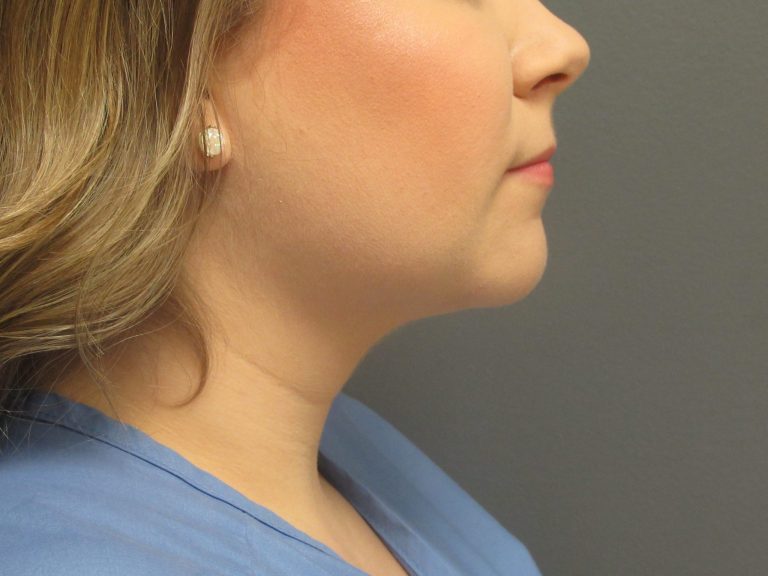
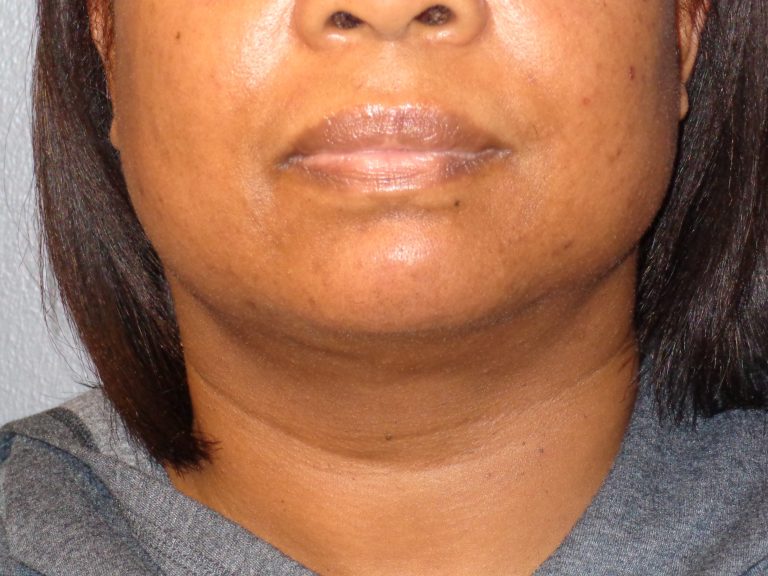
Most liposuction consultations do not go off track because a patient asks the wrong question. They go off track because the patient and provider are speaking two different languages without realizing it. The patient is describing frustration, self-consciousness, and a picture in their head of how they want to look in clothes. The provider is thinking in terms of anatomy, skin quality, fat distribution, safety limits, healing patterns, and whether a result is likely to look balanced six months later.
Bridging that gap matters.
If you are considering Liposuction Farmington Hills options, the quality of the consultation often shapes the quality of the outcome. Not because a conversation alone changes your body, but because clear communication helps your provider understand what you want, helps you understand what surgery can realistically do, and lowers the odds of disappointment that comes from mismatched expectations.
A strong consultation is not about trying to impress your surgeon or saying all the right things. It is about being specific, honest, and open to professional feedback. The best conversations are surprisingly practical. They cover what bothers you, how long it has bothered you, what kind of change would feel worthwhile, and what trade-offs you are actually willing to accept.
Start with the real reason you are considering liposuction
People often begin a consultation by saying, “I just want to look better,” or “I have stubborn fat.” Both statements are true, but neither gives your provider enough to work with. “Better” means different things to different people. One patient wants a smoother waistline in fitted dresses. Another wants less fullness under the chin on video calls. Another has reached a stable weight but still carries fullness in the lower abdomen and flanks that has not responded to diet and exercise.
Say the quiet part out loud. If your lower belly folds over jeans and that is what bothers you, say that. If your outer thighs make pants fit poorly, say that. If you are less concerned about the front view and more bothered by your side profile, mention that early. A provider can do far more with specifics than with broad dissatisfaction.
This is also the moment to share timing and motivation. There is a difference between wanting a thoughtful body contouring plan and wanting to look dramatically different for an event in six weeks. Providers need that context, not because they are judging your reason, but because recovery and final results follow a biological timeline. Swelling can linger for weeks to months. Shape evolves gradually. If your expectations are tied to a near-term deadline, that affects the advice you should receive.
Describe what bothers you in visual, functional terms
Many of the most productive consultations sound less like a cosmetic wishlist and more like a fitting-room conversation. Patients who communicate well tend to explain how the concern shows up in daily life.
You might say that your waist looks square in certain dresses, or that your abdomen feels fuller on one side, or that your inner thighs rub in workout leggings. Those details help a provider understand whether you are describing localized fat, skin laxity, muscle separation, asymmetry, or a combination of issues.
The distinction matters. Liposuction removes fat. It does not tighten significant loose skin the way some people hope. It does not repair separated abdominal muscles. It does not create a result that ignores your natural skeletal structure. A patient may describe “belly fat” when the dominant issue is actually skin elasticity after pregnancy. Another may focus on “saddlebags” when the bigger aesthetic issue is the transition between the waist, hip, and outer thigh. Language can be imprecise, which is normal. What helps is describing what you see and feel, rather than trying to diagnose yourself.
A simple way to do that is to explain the specific contour change you want. Smaller waist from the front. Less projection in the lower abdomen from the side. Better transition from bra line to upper back. More definition under the chin. Those are useful descriptions because they give your provider a target to evaluate.
Bring reference images, but use them carefully
Photos can help, especially if you struggle to put body shape into words. They can also create confusion if they are used as promises instead of conversation starters. The most helpful reference photos are not celebrity screenshots with different bone structure, skin tone, age, and tissue quality. They are images that clarify proportions, degree of definition, or overall silhouette.
If you bring examples, tell your provider what you are responding to in the image. Is it the flatter lower abdomen, the softer hip curve, the narrower waist, or the jawline definition? This prevents the conversation from turning into an unrealistic comparison game.
Providers often appreciate photos of you at a time when your body felt most like your own, especially if that was a healthy, stable period rather than a crash-diet phase. That kind of reference can be more clinically useful than an image of a stranger. It gives context about your frame and how your body stores fat.
It is equally important to hear when a provider says, with good reason, that a photo is not an achievable match. A trustworthy surgeon will not nod along just to make the consultation feel comfortable. They will explain why your anatomy, skin recoil, baseline asymmetry, or treatment area may support some parts of the goal but not others.
Learn the difference between a wish and a surgical goal
A wish sounds like this: “I want my stomach gone.”
A surgical goal sounds like this: “I want less fullness in the lower abdomen and flanks so my waist looks more defined in clothes, even if my stomach is not perfectly flat.”
That shift matters because surgery works in increments, not absolutes. Good providers think in terms of improvement, proportion, and harmony. Patients are usually happiest when they do the same.
This does not mean you should lower your standards. It means you should make them more precise. A precise goal gives your provider a way to say yes, no, or not quite. It creates room for honest planning. If your ideal outcome depends on skin tightening that liposuction alone is unlikely to deliver, that should come up before any procedure is scheduled.
One of the most common disconnects in body contouring is between reduction and definition. Some patients want smaller areas. Others want sharper contour and athletic lines. Those are not always achieved in the same way, and not every body type is suited to highly etched results. Telling your provider whether you prefer a natural soft contour or a more sculpted appearance gives them valuable direction.
Be honest about your weight history and current habits
This part of the discussion is not about blame. It is about planning. Providers need to know whether your weight has been stable, whether you are actively losing weight, whether you have had pregnancies, whether you have large swings in size, and what your lifestyle actually looks like.
If you are ten pounds from your personal goal and have been stable for six months, that creates one set of expectations. If your weight fluctuates by fifteen to twenty pounds through the year, that creates another. If you recently started a GLP-1 medication, changed your exercise routine, or are planning a pregnancy, that can influence timing and outcome.
Liposuction is generally best for targeted contouring, not broad weight loss. A patient who expects the procedure to replace weight management usually ends up disappointed. A patient who sees it as a way to address stubborn pockets after building stable habits tends to be better positioned for satisfaction.
You do not have to present yourself as perfect. In fact, that can backfire. If compression garments sound difficult for you to tolerate, say so. If your work requires heavy lifting, your provider needs to know. If you have trouble taking time off, mention it. A plan that looks excellent on paper but does not fit your real life is not a good plan.
Ask your provider how they see your anatomy
One of the most useful questions in any consultation is simple: “When you examine this area, what do you think is contributing most to what I dislike?”
That question shifts the discussion from sales to clinical judgment. It gives you insight into whether the provider is seeing the same problem you are seeing, and whether liposuction is the right tool.
You may learn that the area bothering you is mostly deep fat, or mostly superficial fullness, or partly skin laxity. You may hear that one side naturally carries more volume than the other. Nearly everyone has some asymmetry. Hearing that upfront can prevent a lot of post-operative confusion, because patients often notice asymmetry more after surgery once the larger concern has improved.
A strong provider will usually explain not just what can be improved, but what limitations are built in. For example, the lower abdomen may improve nicely while still retaining some softness. The flanks may contour well, but dramatic narrowing may not suit your rib cage and pelvis. The neck may refine, but skin quality will influence how crisp the result appears.
That kind of honesty is not discouraging. It is protective.
Talk about skin, not just fat
This is where many consultations become more meaningful. Fat gets most of the attention, but skin quality often determines how polished the final result looks. Two patients can have similar fat volume and very different outcomes because one has strong skin elasticity and the other has looser, thinner, or stretch-marked skin that does not contract as well.
If your provider brings up skin recoil, ask what that means for your case specifically. Ask whether they expect good contraction, modest improvement, or the possibility of residual looseness. Ask whether another procedure, or no procedure at all, would better fit your goal.
People sometimes avoid this discussion because they fear hearing “you are not a candidate.” In practice, it is better to hear an uncomfortable truth in the consultation room than after surgery. The right plan is not always the one you first imagined.
Prepare a few questions that reveal judgment
Not every important question is about technique. Some of the best questions reveal how the provider thinks.
Here are five worth asking:
- What result do you think is realistic for my body, not for an ideal patient?
- What part of my goal is most achievable, and what part is least predictable?
- If I were your family member, would you recommend liposuction alone for this area?
- What will likely look better at three months, and what may still be changing?
- What signs would tell you I should wait, reconsider, or choose a different procedure?
These questions do two things at once. They give you practical information, and they help you assess whether the provider communicates clearly under real-world conditions. Vague reassurance is easy. Nuanced judgment is harder, and much more valuable.
Understand how providers think about safety limits
A consultation should include aesthetics, but it should never be aesthetics alone. Ethical liposuction planning always involves safety boundaries. Those boundaries may include your medical history, medications, nicotine use, prior surgeries, scar tissue, body mass index, extent of treatment area, and whether combining procedures would push recovery too far.
Patients sometimes interpret limits as reluctance or lack of skill. Often, it is the opposite. A surgeon who is willing to say “not all at once” or “not in the way you are picturing” is showing restraint that protects both outcome and health.
If you are exploring Liposuction Farmington Hills providers, pay attention to whether anyone minimizes recovery or promises sweeping transformation without much discussion of healing. Body contouring can be very rewarding, but it is still surgery. Swelling, bruising, temporary firmness, unevenness during healing, and the need for patience are part of the process. Your consultation should make that plain.
Discuss recovery in terms of your actual life
A polished result depends partly on what happens after the procedure. This is why your provider needs to know whether you sit at a desk all day, chase toddlers, travel often, or return to physically demanding work quickly. Recovery is not one-size-fits-all.
A patient with a flexible work-from-home schedule may handle the first week very differently from someone on their feet in retail or healthcare. A parent who cannot avoid lifting a child needs a different conversation from someone living alone who can plan complete rest. If you sleep on your side only, mention that. If you have an important social event in ten days, mention that too.
Practical questions are often the most revealing. When can you drive comfortably? When are you usually presentable in normal clothes? When can you exercise in stages? How long might swelling hide part of the improvement? The answers vary by area treated and extent of procedure, but these are real concerns that deserve real answers.
If you have had children, say what changed and what did not
Post-pregnancy consultations are especially nuanced. Many patients say they “never got their shape back,” but what that means can include several different changes at once: fat redistribution, stretched skin, widened muscles, breast changes, and subtle shifts in posture or rib flare.
If your concerns started after pregnancy, say so, but be specific. Was your waist thicker even after weight loss? Did the lower abdomen stay rounded? Did the skin become crepey or marked with stretch lines? Was there a C-section shelf? Not every one of these concerns responds the same way to liposuction.
A provider may tell you that one aspect of your goal is a good match for liposuction while another is not. That is useful information, not bad news. Mixed anatomy often requires mixed expectations.
Be candid about your emotional expectations
Body contouring can boost confidence, but it does not solve every discomfort a person has with their appearance. Good providers are Liposuction Farmington HIlls alert to this. If you expect liposuction to make you feel at ease in your body after years of constant self-criticism, the surgery may help, but it may not address the whole issue. If you expect it to save a relationship, erase aging, or make every outfit fit perfectly, the goal may be carrying more weight than surgery can reasonably hold.
That does not mean cosmetic goals are shallow. Most are not. Wanting your outer thighs to stop dominating how pants fit is practical. Wanting your profile to match how healthy you feel after years of work is understandable. The key is to separate contour improvement from total life transformation.
The healthiest consultations usually include both excitement and realism.
Watch for how the provider responds when you push for more
Sometimes patients ask for the maximum because they fear regretting too little change. This is common, especially in areas like the abdomen, flanks, and submental region. But “more” is not always better. Over-resection can create unnatural transitions, irregularities, or a hollowed appearance that ages poorly.
A thoughtful provider should explain where aggressive treatment helps and where restraint produces a better long-term contour. This is one of the clearest signs of experience. Skilled aesthetic judgment is not just the ability to remove fat. It is the ability to know where not to.
If a provider never introduces the idea of balance, proportion, or preserving smooth transitions, that is worth noticing. Great contouring is often subtle in planning, even when the visible improvement is significant.
Bring your priorities, not a script
Patients sometimes arrive with pages of online research and try to run the consultation like a checklist. Preparation is smart. Rigidity is not. If you become too attached to a specific term, technique, or trend, you may miss better advice tailored to your body.
What matters most is that you know your priorities. If your top goal is better fit in tailored clothes, say that. If your top goal is a cleaner jawline in photos, say that. If downtime is your biggest concern, say that too. Once your provider understands your ranking of concerns, the conversation becomes far more productive.
A good consultation often changes shape as it unfolds. You may walk in focused on one area and leave realizing another area is driving the visual imbalance. That is not a bait-and-switch when handled ethically. It is the value of experienced assessment.
A short checklist for the appointment itself
If you want to make the most of the consultation without overcomplicating it, keep these points in mind:
- Wear or bring clothing that shows the fit issues you are trying to solve.
- Use plain language to describe what bothers you most, and where.
- Mention weight stability, pregnancies, medications, prior procedures, and smoking or nicotine use.
- Ask what liposuction can improve, what it cannot, and what may require a different approach.
- Leave with a clear picture of recovery, likely timeline, and realistic outcome.
That is enough. You do not need perfect terminology. You need clarity.
How to tell whether the conversation went well
After a strong consultation, most patients feel more informed, not simply more persuaded. They understand the plan, the likely benefits, the main limitations, and the timeline of healing. They have heard at least one thing they wanted to hear and at least one thing they needed to hear.
You should be able to explain the proposed approach back to someone else in normal language. Something like: “The main issue is fullness in my lower abdomen and flanks. Liposuction should improve the contour, but my skin may limit how tight it looks. I will probably see some early change quickly, but the final shape will take longer because of swelling.” If you can say that with confidence, the provider likely communicated well.
You should also feel that your concerns were interpreted accurately. Not necessarily agreed with in every detail, but understood. Being heard matters in aesthetic medicine because satisfaction depends so heavily on alignment. If you left feeling rushed, flattered, or sold to without much nuance, that is information too.
The goal is not a perfect speech, it is a shared plan
No patient walks into a consultation with perfect language. That is not your job. Your job is to be truthful about what you want, what bothers you, and what kind of result would genuinely feel worth the effort. Your provider’s job is to translate that into anatomy, options, safety, and realistic expectations.
When those two sides meet cleanly, the entire process improves. You ask better questions. The provider gives sharper answers. The treatment plan becomes more personal and more grounded. Whether you are still exploring options or actively meeting with a Liposuction Farmington Hills practice, that kind of conversation is one of the strongest predictors of a result you can appreciate for the right reasons.
A well-run consultation should leave you with something better than excitement alone. It should leave you with clarity.
Aesthetic Plastic Surgery & Laser Center, Michelle Hardaway M.D.
27920 Orchard Lake Rd
Farmington Hills, MI 48334
(248) 221-1957
FAQ About Liposuction Farmington Hills
What disqualifies you from getting liposuction in Farmington Hills?
A surgeon may recommend postponing or avoiding liposuction if a health condition, medication, or nicotine use raises the risk of surgery or poor healing. A consultation is needed to assess your medical history and whether the procedure fits your goals.
Can liposuction remove 20 pounds?
Liposuction is a body contouring procedure for localized fat. It is not a weight loss treatment, and a specific number of pounds is not a safe or useful target. The surgeon determines how much can be removed safely for each patient.
What are the risks of liposuction?
Risks include infection, changes in sensation, uneven contours, and complications from anesthesia or blood clots. A plastic surgeon can explain which risks apply to you and what to expect during recovery.